Beyond software – why 70% of ERP projects miss their mark
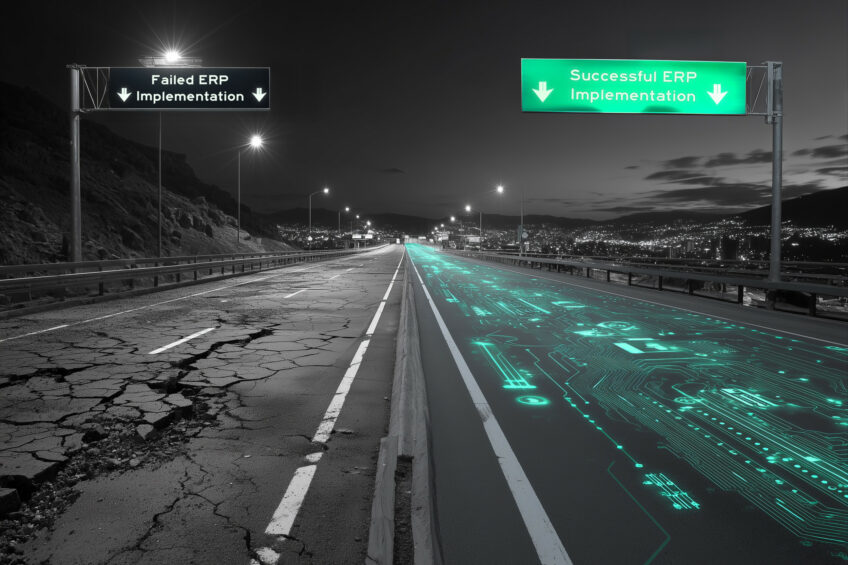
When was the last time you fundamentally questioned how work gets done in your organisation? If it wasn’t just before your ERP upgrade started, you’re already missing the mark. Enterprise Resource Planning (ERP) systems offer the allure of streamlined processes and integrated operations. Yet despite the billions invested annually in ERP solutions, you might be wondering why so many organisations struggle to realise their full potential.
Here’s what most people get wrong: ERP implementation isn’t just a software rollout – it is a fundamental shift in how you think about work, processes, and collaboration. While generic ERP systems may offer basic functionality, they frequently fall short when confronted with industry-specific workflows, evolving regulations, complex supply chains, and unique profitability pressures. The companies that succeed aren’t the ones that simply “go live” – they’re the ones that transform how their businesses operate at their core.
The hidden trap that kills ERP success
ERP implementations often fall victim to a fundamental misconception: that technology alone drives transformation. Most organisations make the costly mistake of approaching ERP deployment with a “lift-and-shift” mentality, attempting to map their legacy processes, unchanged, into the new system.
When you neglect business process engineering and skip the cultural work, here’s what happens: old inefficiencies, bottlenecks, manual workarounds and data silos don’t disappear – they just move into your new platform. Employees quickly figure out that this “upgraded” system isn’t better, it’s just different. They see ERP as “just another tool” rather than a better way of working, leading to low user adoption and resistance to change.
The result? Automation and integration capabilities go underutilised, causing you to miss your projected ROI. The gap between expectations and reality often drives expensive over-customisation as businesses try to force the system to accommodate unchanged processes. This makes future upgrades difficult and costly while project timelines stretch and teams develop change fatigue.
Here’s the truth: the software isn’t your problem. Your problem is failing to recognise that successful ERP implementation requires you to reengineer your processes and transform your culture. This challenge is particularly acute in specialised industries like feed production, where generic ERP systems lack the built-in workflows that reflect industry best practices.
The winning formula: from installation to transformation
The difference between success and failure comes down to how you approach your project: treat it as business process engineering, not software installation. This means stepping back and rethinking your workflows to achieve dramatic improvements, rather than just digitising what you’re already doing.
- Start with stakeholder engagement. Focus on the “why” first. What outcomes are you trying to achieve? Too many projects bring key users in late to “test the system”, resulting in poor adoption. Get stakeholders involved early, let them shape the solution, and ensure they understand the business case behind decisions.
- Simplify and standardise ruthlessly. Industry-specific ERP software provides a head start by offering built-in best practices, allowing you to focus on exceptions that truly matter rather than customising generic software to match legacy processes. Smart automation should handle repetitive work while keeping humans involved where judgment adds value.
- Implement in phases. Break implementations into manageable phases delivering tangible value quickly rather than tackling everything at once. Create flow throughout your operation by designing robust handovers between departments and integrating workflows where possible.
- Embrace continuous improvement. You’re not running a project with an end date – you’re starting a transformation journey. Build retrospective reviews into each phase and invest in ongoing training.
Your next step: industry-specific excellence
Your ERP implementation success comes down to a fundamental choice: you can treat it as mere software installation and struggle with poor adoption and missed ROI, or you can embrace business process engineering and industry-specific solutions to achieve sustained competitive advantage.
Choosing vendors with deep domain expertise is critical, as industry-specific workflows and built-in best practices can dramatically reduce your implementation risks and accelerate your time to value. With Bestmix you gain a strategic partner that understands your industry’s unique challenges. Just ask read the testimonial of ABZ Diervoeding. This company recently renewed their ERP environment with us: “Bestmix software manages to capture the complexity of our processes by making all systems communicate with each other.”
The question isn’t whether your business can afford ERP transformation – it’s whether you can afford to settle for anything less than industry-specific excellence.