German feed market suffers from unsettled conditions
Despite a slight increase in production this year, Germany’s animal feed industry continues to face significant uncertainty. Ongoing animal disease outbreaks, regulatory adjustments, and dependence on imported feed components are contributing to a cautious outlook among industry leaders.
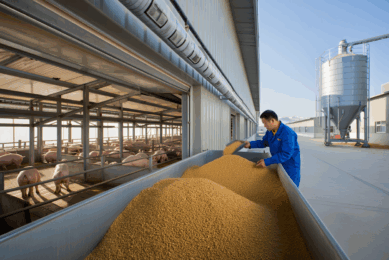
Although the German animal feed market grew by some 2% to around 22 million tonnes this year, the general mood in the industry is subdued.
According to Dr Hermann-Josef Baaken, spokesman for the management of the Deutscher Verband Tiernahrung DVT: “This is certainly a good figure, but it should not obscure the overall market situation and also the general development of agriculture, which continue to be very unsettling.”
Animal diseases impact feed demand
As in many other European countries, animal diseases are once again hitting a number of areas of Germany. AVP has been discovered in various regions while in November alone, 105 cases of HPAI were registered, the Friedrich Loeffler Institute reported. “This will have an impact on the deliveries of compound feed due to the fact that, as a result, stall occupation is no longer available,” Dr Baaken says. He adds: “Farmers’ reluctance to invest remains a hurdle too. The mood continues to be tense, also in the compound feed sector.”
Regulations challenge feed sector
The DVT is worried too about plans to simplify various legal regulations such as the EU Deforestation Regulation or the Supply Chain Due Diligence Act. “It is an arduous task to comb through the bureaucratic and administrative jungle for further simplifications and to implement them and also to convince the institutions that, with those simplifications, the high standard of food and feed safety should be maintained,” Baaken stresses.
Reliance on imported protein feed
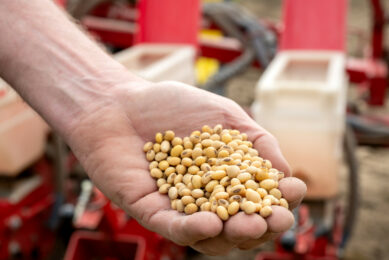
He also points out that Germany is dependent on imports of high-quality protein feed, especially soy, in the long term so that it can properly care for its livestock.
Supply chain and additives concerns
Dr Baaken: “The demand for high-quality and digestible protein for our livestock far exceeds the possibilities of domestic protein crop production. While the global availability of soybean meal is unproblematic, the situation is different for feed additives. Our DVT study clearly shows that an EU autonomy in amino acids and vitamins is problematic because of its competitiveness with third countries, especially China. Securing the supply of many feed additives requires production to be relocated to the EU and neighbouring countries such as the UK and Switzerland. This, in turn, requires a supportive industrial policy to secure existing production capacities and enable investments in new capacities.”